
The essentials first
Have a steady warning checked promptly.
Flashing, juddering or loss of power: stop safely.
A fault code is a clue, not a list of parts to replace.
First, assess the warning
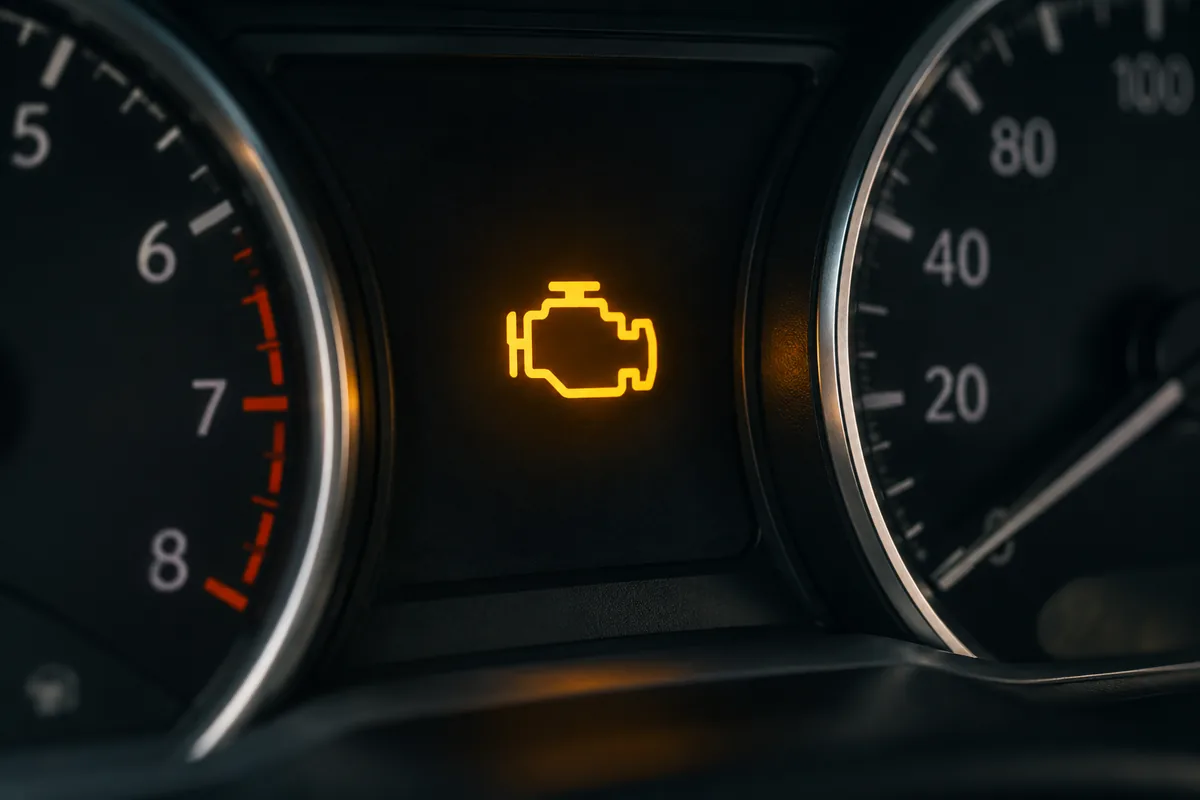
Amber means that the engine or emissions management system has detected and stored a fault. The car may still feel completely normal, but you should not ignore the warning.
Flashing can indicate misfiring. Unburnt fuel can damage the catalytic converter. If the engine warning light flashes, stop safely and arrange assistance, even if there is no juddering or loss of power yet.
What to do on the road
Reduce the load on the engine and avoid high revs or heavy loads. Note when the light appeared and whether fuel consumption, engine noise or the way the engine runs has changed.
Temperature, oil or other red warnings take priority according to their urgency. Stop somewhere safe if the engine runs roughly, produces smoke or has very little power.
A closer look
Steady amber
A fault is stored; drive cautiously and arrange a prompt check.
Flashing
Urgent: stop safely and arrange assistance.
Red
Follow the handbook immediately; do not continue if it tells you to stop.
Why a fault code is only a clue
A diagnostic code identifies an abnormal reading; it does not automatically identify the defective component. For example, an oxygen-sensor warning can also result from unmetered air, an exhaust leak or a wiring problem.
Fault codes, live data and a visual inspection therefore need to be considered together. Only then can the technician decide which repair is actually necessary.
Clearing the code leaves the cause
A basic diagnostic device can often reset the warning. However, that does not repair the fault and can erase information that would help with diagnosis.
If the light returns, the car clearly needs to be checked. The problem will need to be resolved before an emissions inspection in any case.
Prepare for your appointment
Give the workshop the model, engine variant and exact circumstances: a cold start, acceleration or just after refuelling. Photos of the display and any codes already available are useful too.
If possible, avoid making changes to the engine before the appointment. That makes it easier to understand the conditions in which the fault occurred.
- Only record the warning colour and flashing once safely parked.
- Observe engine running and power.
- Avoid heavy engine loads.
- Note the fault code while safely parked; do not clear it prematurely.
- Arrange an appointment promptly.
Still have a question?
Can I keep driving with an amber light?
Often you can drive cautiously until a prompt inspection, provided the engine runs smoothly and there are no other warning signs.
What does flashing mean?
It can indicate ignition or combustion misfires. Stop somewhere safe and arrange assistance.
Does clearing the fault memory help?
It only removes the warning temporarily. The cause remains, and important diagnostic information may be lost.