
The essentials first
Follow the manufacturer’s interval.
Do not run a belt until symptoms appear.
Have chain rattling checked promptly.
Keeping engine timing in step
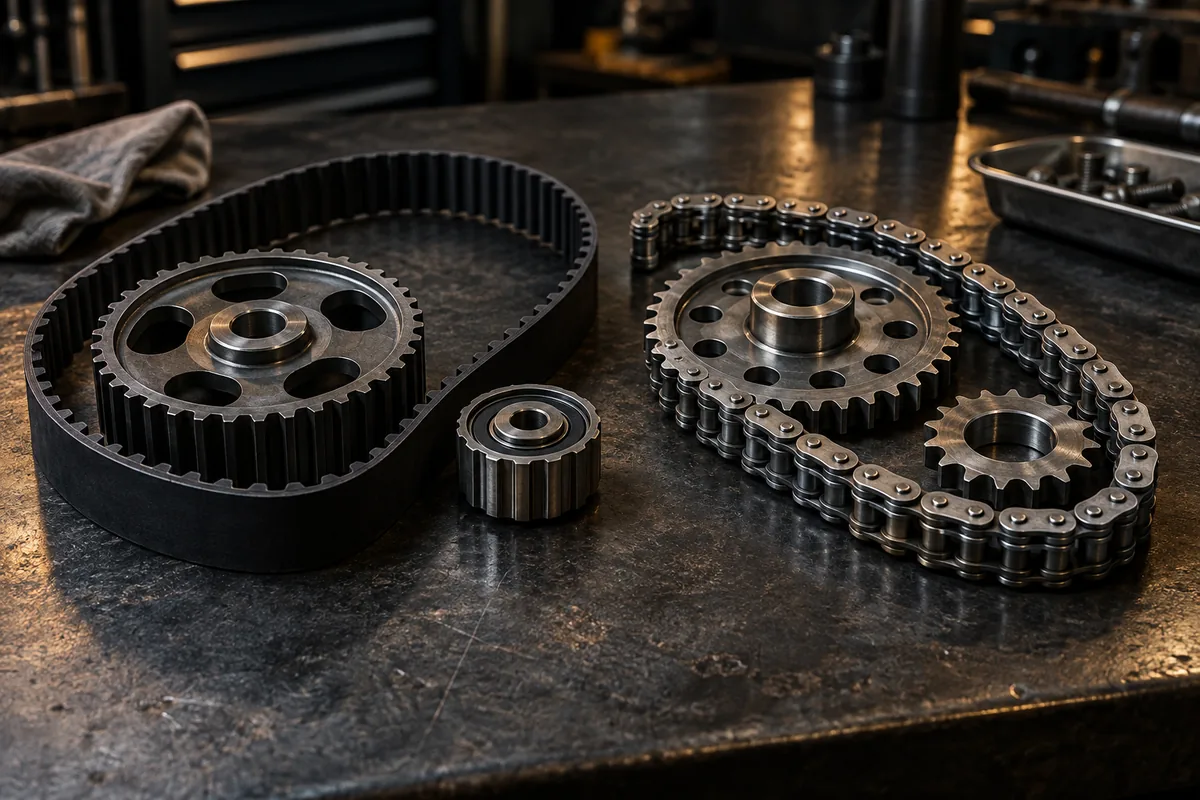
Both components connect the crankshaft and camshaft. They must work precisely so that the valves and pistons move at the correct moments.
Which system your engine uses depends on the model and engine code. Rely on the documentation or an enquiry using the vehicle identification number.
Timing belt: keep to the schedule
Manufacturers specify timing-belt replacement intervals by mileage and often age as well. This is a maintenance requirement, rather than an approximate recommendation.
Depending on the engine, a broken belt can cause serious consequential damage. Do not wait for noises or visible cracks before arranging replacement.
A closer look
Timing belt
Planned replacement according to the manufacturer’s schedule.
Timing chain
Assessment according to condition; investigate symptoms.
Unclear history
Check the documents and establish when work is due.
Timing chain: not a lifetime guarantee
Chains are designed for long service, but there is no universal promise that they will last as long as the car. Oil quality and engine design influence their condition.
Rattling at a cold start, rough running or timing-related fault codes need investigation. If symptoms are pronounced, do not keep driving on the assumption that nothing is wrong.
What a belt replacement involves
Depending on the engine, tensioners, idler pulleys and sometimes the water pump are replaced as required by the manufacturer. This avoids a related component later creating the same labour-intensive job.
The specific repair instructions and correct parts are what matter. There is no single replacement-parts list that applies to every engine.
Keep evidence of the work
Retain invoices showing the date, mileage and parts used. These make the next maintenance appointment easier to plan and provide clarity when selling the car.
For a used car without reliable proof of replacement, do not choose a service date by guesswork. Have the maintenance position checked against the available documents.
- Have the VIN and engine code ready.
- Check both age and mileage intervals.
- Keep the invoices.
- Note any cold-start noises.
- Clarify gaps in the maintenance records.
Still have a question?
Where can I identify the type?
In the operating and service documents, or through the VIN and engine code.
Can I wait until the belt makes a noise?
No. The specified replacement interval is what matters.
Is rattling on a cold start normal?
It can indicate a problem and should be investigated promptly.