
The essentials first
Never buy without seeing the car.
Compare the documents and VIN.
Plan for an independent inspection.
Inspect in daylight
View the car when it is dry and the light is good. Differences in paint colour, uneven panel gaps, rust or moisture in the boot are reasons to ask further questions.
Also check tyres, lights and any parts of the underside you can see safely. An unusual finding is not a verdict, but it is a useful point to raise during the inspection.
Documents and history
Compare the vehicle identification number with the documents. Read the service record, invoices and most recent German roadworthiness inspection report, known as the HU report.
Consider whether the mileage, condition and service dates fit together. Missing documentation is a reason to plan more cautiously.
A closer look
Appearance
Shows care and possible signs of damage.
Documents
Help assess maintenance and mileage.
Technical inspection
Identifies many less obvious risks.
Test drive with a cold engine
If possible, start the engine cold, when unusual noises or rough running are easier to notice. Drive in town, on country roads and, where conditions and speed limits allow, at higher speeds.
Pay attention to steering, brakes, gear changes, warning lights and unusual sounds. A test drive does not replace a technical examination.
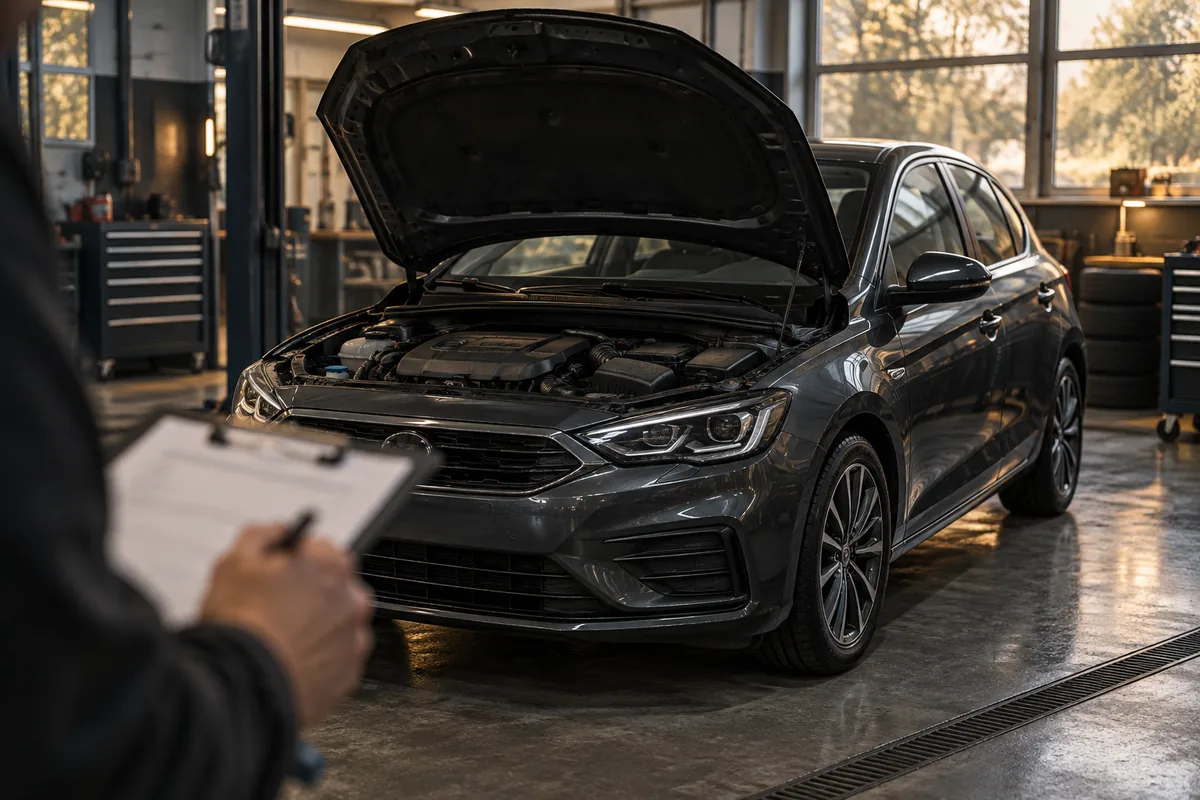
Arrange an independent technical check
A pre-purchase inspection can reveal leaks, rust, brake and suspension problems and stored faults. It can also highlight maintenance that will be due soon.
For hybrid and electric vehicles, include charging cables, charging operation and any available battery condition report in your assessment.
Decide without time pressure
Write down unresolved points and compare them with the documents. Do not let anyone pressure you into agreeing to the purchase.
If important questions remain unanswered, postpone the decision or have the car inspected. The details behind a good offer should stand up to scrutiny.
What to bring to the appointment
Bring the advert, VIN, service documents and a list of questions. If the seller attends, you can clarify their statements directly.
The inspection assesses the condition that can be seen and measured. It cannot promise that the car will never need an unexpected repair.
- View the car in daylight.
- Read the service history and HU report.
- Arrange a cold start and test drive.
- Check warning lights.
- Book an independent technical inspection.
Still have a question?
Is a recent HU inspection enough?
No. It assesses roadworthiness at the time of inspection, rather than providing a complete forecast for a purchase.
Why start from cold?
Some noises and running problems appear mainly during a cold start.
What else matters for electric cars?
Charging operation, cables and any available battery condition report are important checks.