
The essentials first
Winter road conditions trigger the requirement, not a calendar date.
All car wheels need suitable tyres with the Alpine symbol.
At least 1.6 millimetres of main tread; also check damage and pressure.
Road conditions determine the requirement
The familiar German “October to Easter” rule of thumb can remind you about seasonal tyre changes, but it is not a statutory deadline. A dry November day and an icy road in April are different situations. The actual winter conditions on your journey are what matter.
Consider the return trip and colder stretches too. In Kiel, a clear main road can lead onto a slippery side street on the way home. Looking only at conditions where the car is parked is not enough if they change along the route.
Look for the Alpine symbol on the sidewall
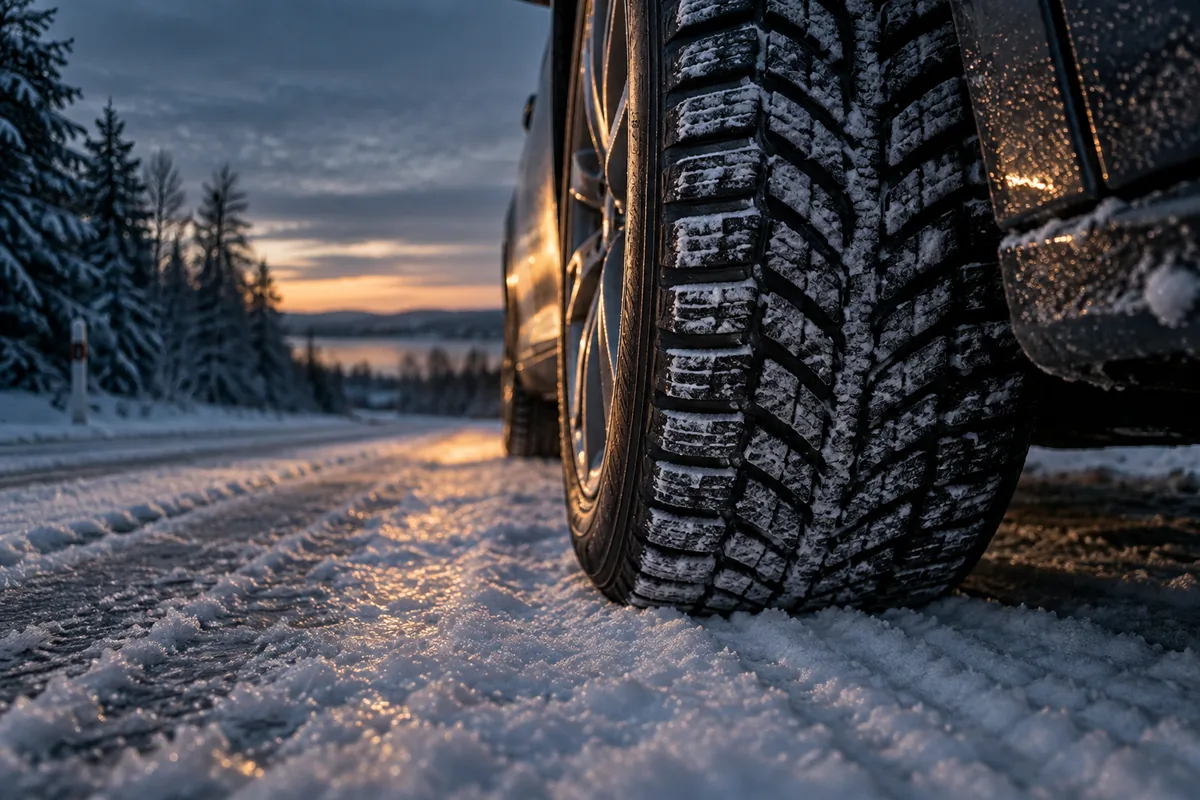
Suitable winter tyres carry the mountain-and-snowflake pictogram, also called the Alpine or 3PMSF symbol. Check the marking on the tyre itself. A product name containing “winter”, a snow design on the packaging or an M+S marking alone does not replace it.
All-season tyres can also fulfil the requirement if they carry the necessary Alpine marking and are suitable for the vehicle. Their suitability for frequent winter driving additionally depends on the conditions of use and tyre condition. Size, load rating and speed capability must match the car.
A closer look
Winter tyres with the Alpine symbol
Meet the winter-tyre requirement if suitable for the car and in a lawful condition.
All-season tyres with the Alpine symbol
Can also meet the weather-dependent requirement.
M+S alone or summer tyres
Do not meet the requirement in the specified winter conditions.
Every car wheel needs suitable tyres
Fitting winter tyres only to the driven axle is not enough on a passenger car. The situational requirement applies to all wheels. Four-wheel drive does not create an exemption: it may help with moving off but cannot replace the grip needed for braking and cornering.
Special legal rules exist for certain other vehicle categories. Do not apply those exceptions to an ordinary car. Snow chains do not replace the required suitable tyres either; on appropriately signposted routes they may be needed in addition.
Tread is only one part of tyre condition
The legal minimum main-tread depth is 1.6 millimetres. This is measured in the broad grooves in the central tread area around the entire circumference. Check several positions because a tyre may wear unevenly.
Minimum depth does not promise good winter performance. Cracks, bulges, embedded objects and loss of pressure also need attention. Check pressure against the manufacturer’s instructions and resolve any doubts about condition before the next journey. A visible Alpine marking does not make a damaged tyre safe.
Reconsider the journey if ice arrives unexpectedly
Starting on a dry road with summer tyres does not make them adequate if winter conditions develop later. Find a safe opportunity to interrupt the journey and arrange a suitable alternative. Being close to the destination is not a general exemption.
Even with suitable tyres, speed and following distance must match visibility, weather and road conditions. Avoid abrupt steering and braking. Also prepare clear windows, working wipers and appropriate screenwash: tyres cannot compensate for poor visibility.
- Find the Alpine symbol on every tyre.
- Measure tread depth at several positions.
- Inspect sidewalls for cracks, bulges and other damage.
- Set pressure for the vehicle and its load.
- Consider weather and roads for both outward and return trips.
Still have a question?
Are all-season tyres allowed in winter?
Yes, provided they carry the Alpine symbol and meet the other requirements for the vehicle. M+S alone is not sufficient. Check the marking and condition on all four tyres.
May a car with summer tyres be parked during winter?
The situational requirement concerns driving in the specified road conditions. A parked car does not need different tyres simply because of the date. Before the next journey, its equipment must suit the conditions.
Can I drive to a workshop on summer tyres in snow?
There is no general exception for this journey in an ordinary car. Arrange tyre replacement or transport so that you do not drive on unsuitable tyres in winter road conditions.
Sources & further reading
- StVO, section 2(3a) – winter-tyre requirement (German)
- StVZO, section 36 – tyres and tread (German)
- StVO, section 52 – end of the M+S transition period (German)
- StVO, section 3 – speed appropriate to conditions (German)