
The essentials first
Soft pedal or red warning: stop safely.
Have persistent noises investigated.
Brake wear is measured, not guessed.
Take pedal feel seriously
A pedal that sinks further than usual or feels spongy can indicate a problem in the braking system. Do not keep driving in the hope that everything is all right.
If a red brake warning appears, or you cannot be confident that the brakes are working properly, park the vehicle somewhere safe and seek assistance.
Understanding brake noises
After wet weather or a period of standing, light surface rust can briefly cause noise. This usually disappears after a few normal applications of the brakes.
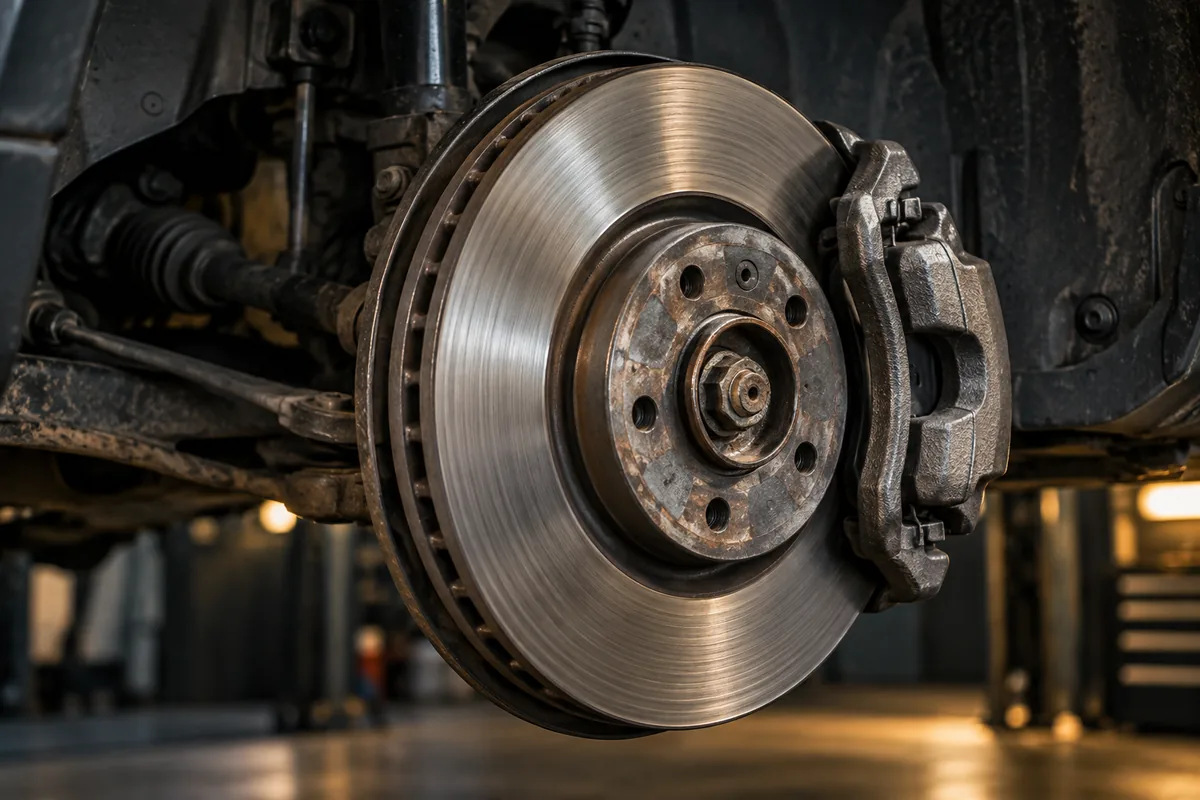
Persistent squealing, grinding or scraping can come from the pads, discs or components that are beginning to seize, and should be investigated.
A closer look
Brief noise after wet weather
Often surface rust; observe whether it clears.
Persistent grinding
Arrange an inspection promptly.
Soft pedal or red warning
Stop somewhere safe and seek assistance.
Pulling and vibration
If the car pulls to one side under braking, the braking force may differ between the left and right sides. Hold the steering wheel securely and arrange a prompt investigation.
Vibration through the pedal or steering wheel can be caused by uneven discs or suspension problems. These symptoms require a workshop inspection, rather than experiments on the road.
Pads, discs and brake fluid
The rate at which pads and discs wear varies greatly with the vehicle and how it is used. The manufacturer’s wear limits and the actual measured thickness determine what is needed.
Brake fluid absorbs moisture, so it must be replaced according to the manufacturer’s schedule. This helps maintain braking performance when the system is exposed to high temperatures.
Until the inspection
Avoid unnecessary journeys and heavy demands on the brakes. Do not rely on a noise disappearing by itself.
When booking, describe the pedal feel, the noise, the speed at which it occurs and the side it seems to come from. These details help the workshop carry out a safe, focused inspection.
- Pay attention to warning lights.
- Describe how the pedal feels.
- Note pulling or vibration.
- Avoid unnecessary journeys.
- Follow the manufacturer’s requirements.
Still have a question?
How long do brake pads last?
This depends heavily on the vehicle, driving style and use; the remaining pad thickness must be checked.
Do the discs always need replacing too?
No. Minimum thickness, surface condition and overall condition determine whether they need replacement.
Can I drive with a soft pedal?
No. Have the braking system inspected immediately.