
The essentials first
Fully electric passenger cars generally have the same HU intervals as other cars.
The emissions test is omitted only for a purely electric drivetrain.
HU and remaining battery-capacity assessment are different services.
Electric drive does not remove the HU obligation
Inspection intervals depend on vehicle category and use, rather than whether you fill up with fuel or electricity. Special uses, including certain passenger transport or rental arrangements, can have different intervals. The recorded deadline for your vehicle is decisive.
A service reminder or software update does not replace the HU. Read the deadline on the sticker and in the previous inspection report. Buying a used electric car generally leaves its existing deadline in place; the purchase does not start another three-year period.
Brakes, tyres and suspension still matter
Even if the vehicle often slows through regeneration, its mechanical brakes must work reliably. Brake discs that are used infrequently can corrode. Unusual noises, judder or changed braking performance should be professionally investigated before the appointment.
Check tyres for adequate tread, damage and uneven wear. Correct load rating and manufacturer-specified pressure are especially important on a heavy vehicle. Looking at the inner tyre surfaces can reveal issues that are hard to see from outside. Do not carry out risky checks underneath an unsecured car.
A closer look
Battery-only car
HU required; no exhaust-emissions test.
Plug-in hybrid
HU and generally an emissions-related inspection of the combustion engine.
Battery-health assessment
Separate evaluation of battery capacity; does not replace the HU.
What is examined on the electric drivetrain
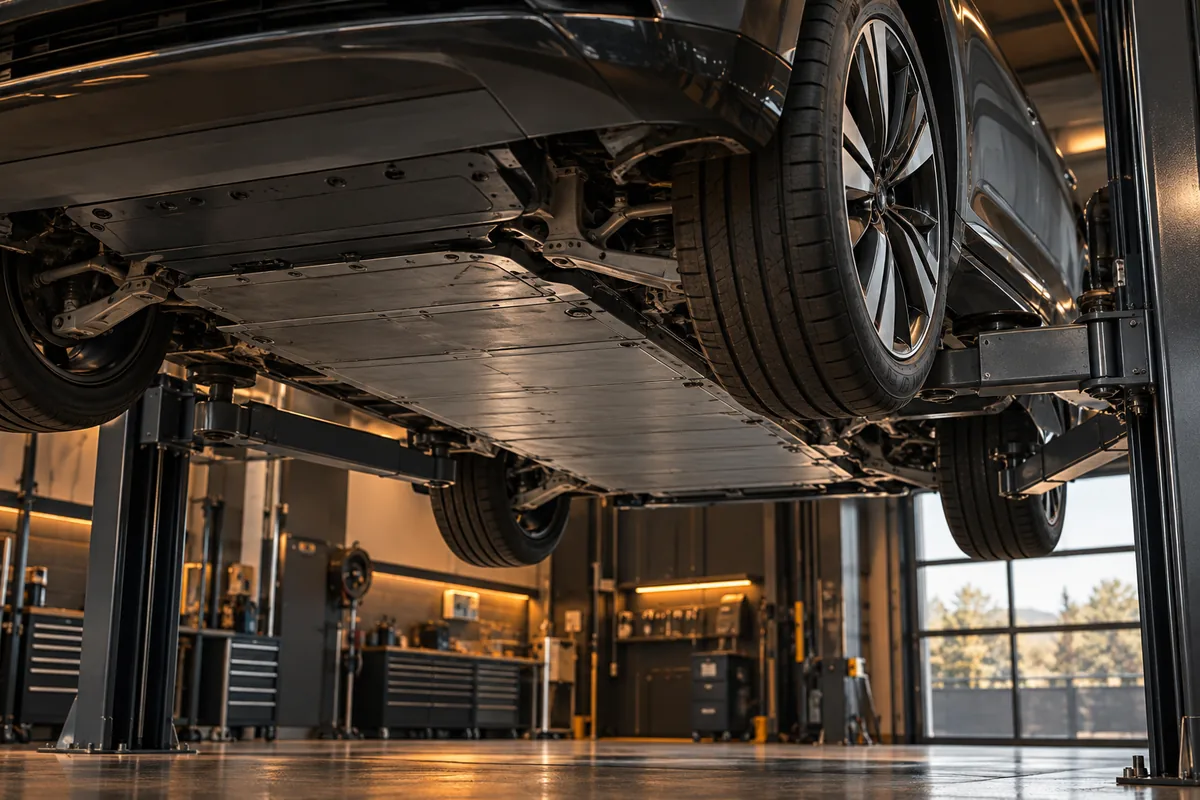
Alongside the usual vehicle components, accessible safety-related parts of the electric drivetrain are examined. Examples include the visible condition of cables, battery housing and charging connection. The precise inspection follows the requirements for the particular vehicle model.
Mention warning messages or a previous impact to the underside. Do not open, disconnect or repair orange high-voltage cables or damaged electrical components yourself. These jobs require appropriately qualified personnel and suitable safety measures.
An HU is not a driving-range certificate
The HU assesses the prescribed roadworthiness and compliance requirements. It does not provide comprehensive evidence of remaining usable battery capacity or promise a particular driving range. A new sticker therefore does not answer every question when buying a used electric car.
A separate assessment can help establish battery health. Clarify which value is measured or read out, under what conditions the test takes place and what its report actually says. Displayed range changes with temperature, consumption and use, so it does not replace this assessment.
Make the vehicle ready for inspection
Bring the key or required key card and registration certificate Part I. Tell the inspection station about any special procedure for starting, manoeuvring or enabling a necessary inspection mode. Allow enough charge for the journey, inspection and return trip; a fully charged battery is not a universal requirement.
Check lights, wipers and windscreen washers. Have known faults investigated beforehand and prepare any relevant modification documents. Concealing or disabling warning displays does not repair the underlying problem and prevents a proper assessment.
- Check the deadline on the sticker and report.
- Prepare the key or key card and vehicle documents.
- Allow sufficient charge for the appointment and return trip.
- Look for brake, tyre and lighting problems.
- Mention warning messages and known underbody damage beforehand.
Still have a question?
Does a plug-in hybrid also avoid an emissions test?
No. The exemption for a fully electric car does not extend to a plug-in hybrid. Because it has a combustion engine, examination of its engine management and exhaust-treatment system generally remains relevant.
Is the battery removed during the HU?
The regular HU does not involve dismantling the battery. Visible damage or a warning message may nevertheless require further assessment by qualified specialists.
Should I brake especially hard before the HU?
Generic hard-braking manoeuvres are not useful preparation. Follow the manufacturer’s brake-care guidance and have any abnormal braking behaviour checked. Safety and consideration for other road users come first.
Sources & further reading
- StVZO, Annex VIII – HU intervals and inspection findings (German)
- StVZO, Annex VIIIa – HU procedure and scope (German)
- TÜV NORD – main inspection of electric cars (German)
- TÜV NORD – battery-health assessment (German)